
ISEAE 2026

Prof. Qing-Long Han
Professor Han is currently the Deputy Vice-Chancellor and Distinguished Professor at Swinburne University of Technology, Melbourne, Australia. He previously held various academic and administrative positions at Griffith University and Central Queensland University, Australia. He is a Highly Cited Researcher (Clarivate) in the field of Engineering and Computer Science. He has served as a member of the IEEE Industrial Electronics Society (IES) Membership Committee and a member of the IEEE IES Fellow Committee. His research interests include networked control systems, multi-agent systems, time-delay systems, smart grids, unmanned ground/aerial vehicles, and neural networks.
Professor Han was the recipient of the 2024 IEEE Dr.-Ing. Eugene Mittelmann Achievement Award (the highest honor in industrial electronics), the 2021 Norbert Wiener Award (the highest award in systems science and engineering and cybernetics), and the 2021 M. A. Sargent Medal (the highest honor of the Electrical College Board of Engineers Australia). He received the IEEE Systems, Man, and Cybernetics Society Andrew P. Sage Best Transactions Paper Award in 2019, 2020, and 2022, the IEEE/CAA Journal of Automatica Sinica Norbert Wiener Review Award in 2020, and the IEEE Transactions on Industrial Informatics Outstanding Paper Award in 2020.

Prof. Zidong Wang
Dr. Zidong Wang is a Professor of Dynamics Systems and Computing at the Department of Computer Science, Brunel University London, UK. He is a Fellow of the IEEE, a Fellow of the Royal Statistical Society, and a Member of the Academia Europaea (The Academy of Europe) and the European Academy of Sciences and Arts. He received the Alexander von Humboldt Research Fellowship in 1996, the JSPS Research Fellowship in 1998, and the William Mong Visiting Research Fellowship from the University of Hong Kong in 2002.
He has been engaged in research for many years in intelligent data analysis (deep learning, evolutionary computing, bioinformatics), control theory (stochastic control, robust control, nonlinear control, model reduction), and signal processing. He has published over 700 international papers in SCI journals and authored 20 English research monographs. In 2012, he was selected by Thomson Reuters as a "Hottest Scientist" in the direction of big data analysis. He has been continuously selected by Clarivate as a Highly Cited Researcher in both Computer Science and Engineering for many years, ranking first in the field of Electronic and Electrical Engineering in the UK for his h-index (currently 138). He received the Second Prize of the National Natural Science Award of China in 2014 (ranking second), and the inaugural Academic Research Impact Award from Brunel University London in June 2020.

Prof. Armando Walter Colombo
Dr. Armando Walter Colombo is a Professor at the University of Applied Sciences Emden/Leer, Germany, and has been the Director of the Institute for Industrial Informatics, Automation and Robotics (I2AR) since 2012. He has served as the Director of Collaborative Innovation Project Management and as a Senior Expert - Edison Level 2 within the Industrial Business Unit of Schneider Electric. He is listed in "Who's Who in the World" / Engineering 99-00/01 and the International Biographical Centre Cambridge's "Outstanding People of the 20th Century". Professor Colombo has held leadership positions in numerous international research and innovation projects related to industrial informatics. His research interests include Industrial Cyber-Physical Systems, industrial digitalization and systems engineering, the Internet of Services, and solutions compliant with Industry 4.0 standards.
Professor Colombo holds more than 30 industrial patents and has published over 300 peer-reviewed papers in journals, books, book chapters, and conference proceedings. Through his contributions, he has made pioneering scientific and technological contributions that are now considered among the foundations of the "Fourth Industrial Revolution". He is a member of the IEEE IES Administrative Committee (AdCom), a member of the Fellow Committees of IEEE IES, IEEE SMS, and IEEE CS, and the IES representative to the IEEE Systems Council. He is a co-founder of three IEEE Technical Committees: Industrial Agents, (ii) Industrial Informatics, and (iii) Industrial Cyber-Physical Systems.

Prof. Akshay Kumar Rathore
Professor Akshay Kumar Rathore is an expert in power electronics and motor drive control, currently a Professor in the Department of Electrical and Computer Engineering at the National University of Singapore (NUS). Previously, he served as a Professor and held several administrative positions at Concordia University in Montreal and Singapore Polytechnic.
He has received numerous international awards, including the IEEE IAS Andrew W. Smith Outstanding Young Member Award (2013), the IEEJ Isao Takahashi Power Electronics Award (2014), the IEEE IES David Irwin Early Career Award (2017), and the IIT (BHU) Distinguished Alumnus Award (2023). He has published approximately 300 research papers, including 110 in IEEE Transactions, holds several patents, and has significant impact in areas such as multilevel inverters and snubberless current-fed DC-DC converters. Professor Rathore currently serves as the Co-Editor-in-Chief of the IEEE Transactions on Industrial Electronics and is a member of various awards and review committees. He is a member of the IEEE Nikola Tesla Award Committee, the IEEE Power Engineering Medal Committee, and a Distinguished Lecturer of the IEEE Power Electronics Society. He has previously served as an Associate Editor for several IEEE technical committees and journals.

Prof. Jiande Wu
Jiande Wu is a Professor at Yunnan University, selected for the National High-level Talent Support Program, a Yunnan Scholar, and a Leading Talent in Industrial Technology of Yunnan Province. He concurrently serves as the Director of the China Nonferrous Metals Industry Intelligent Systems and Advanced Control Engineering Technology Research Center, and the Deputy Director of the Automation Academic Committee of the China Nonferrous Metals Society. His research focuses on industrial process detection and intelligent control, industrial big data analysis and modeling, and industrial equipment health assurance. He has led more than 20 projects, including key projects of the National Natural Science Foundation of China Regional Joint Fund and major science and technology projects of Yunnan Province. He has published over 70 papers in journals such as IEEE Transactions and holds more than 40 authorized patents. His research achievements have been honored with the Second Prize of the National Science and Technology Progress Award, the First Prize of the Yunnan Provincial Science and Technology Progress Award, the First Prize of the Yunnan Provincial Natural Science Award, and the First Prize of the Chinese Association of Automation Natural Science Award, among others.

Prof. Hongtao Xie
Hongtao Xie is a Professor and Doctoral Supervisor at USTC, a National High-level Talent, an IET Fellow, an Outstanding Member of the Youth Innovation Promotion Association of the Chinese Academy of Sciences (CAS), and a member of the CAS Cybersecurity Expert Group.
He conducts research in artificial intelligence and multimedia content security, including visual content recognition and reasoning, cross-modal recognition of scene text images, cross-modal content analysis and understanding, and intelligent content generation and security. As the first or corresponding author, he has published over 100 academic papers in leading international journals and conferences such as IEEE-TPAMI, NIPS, ICCV, and CVPR. He received the Second Prize of the National Technological Invention Award in 2023, the Second Prize of the National Natural Science Award in 2019, the First Prize of the Ministry of Education Technological Invention Award in 2022, the Excellence Award of the China Patent Award in 2021, the First Prize of the Chinese Institute of Electronics Natural Science Award in 2018, and the Young Scientist Award from the China Society of Image and Graphics in 2022. He serves on the editorial board of four renowned international journals including ACM TOMM, has served as Area Chair/Senior PC for CCF-A class conferences more than 10 times, and is an Outstanding Member of the CAS Youth Innovation Promotion Association and a member of the CAS Cybersecurity Expert Group.

Prof. Bin He
Bin He is a Tenured Professor at the College of Electronics and Information Engineering, Tongji University. He is the Chief Scientist for the National AI 2030 Major Project, a National High-level Talent, the Executive Director of the Shanghai Research Institute for Intelligent Autonomous Systems, and the Deputy Director of the State Key Laboratory of Intelligent Autonomous Systems.
His main research directions include intelligent robotics, intelligent perception, intelligent detection, unmanned systems, and digital twins. In recent years, he has published over 100 papers in important domestic and international academic journals such as IEEE/ACM Transactions, and has been granted more than 50 invention patents. As the first completer, he received one Second Prize of the National Science and Technology Progress Award. As a main completer, he received four other first and second prizes at the provincial and ministerial level. He was selected for the Ministry of Education's New Century Talents Program and has received honorary titles such as the Shanghai Youth Science and Technology Outstanding Contribution Award, Shanghai Excellent Technical Leader, and Shanghai Youth Science and Technology Talent. He currently serves as the Deputy Director of the Unmanned Systems Branch of the Chinese Institute of Command and Control, the Deputy Director of the Construction Robot Branch of the Chinese Association of Automation, a member of the Ministry of Industry and Information Technology Humanoid Robot Expert Group, a member of the 8th Science and Technology Committee of the Ministry of Education, the Chief Scientist for the AI 2030 Major Project, and an Associate Editor for the SCI journal Robotics Intelligence and Automation.

Prof. Bogen Cai
Professor Bogen Cai is the Dean of the School of Automation and Intelligence at Beijing Jiaotong University. He primarily conducts research on the application of GPS and GIS technology in transportation, application of information fusion theory, inertial navigation and positioning technology, communication-based train control systems, and intelligent control technology and its applications. He has made outstanding contributions to the independent technological innovation and steady application of new train control systems for Chinese railways. He received the Second Prize of the National Science and Technology Progress Award in 2017. In 2022, he received the Zhan Tianyou Railway Science and Technology Achievement Award. He is a Senior Member of the China Computer Federation (CCF), a Senior Member of the Chinese Association for Artificial Intelligence (CAAI), a Senior Member of IEEE, and the Deputy Director of the Automation Committee of the China Railway Society, among other positions.

Prof. Xuzhu Dong
Xuzhu Dong is a Professor, Professor-level Senior Engineer, and Doctoral Supervisor at the School of Electrical Engineering and Automation, Wuhan University. He previously served as the Deputy Chief Engineer of the Electric Power Research Institute of China Southern Power Grid and the Director of its Smart Grid Research Institute. He also held positions as Project Manager, Department Chief Engineer, and Department Lead Engineer at EPRIsolutions, Progress Energy, and FirstEnergy in the USA. He has long been engaged in scientific research and management in the fields of smart grids and equipment asset management.
He concurrently serves as a member of the Expert Group for the MoST 2030 Smart Grid Major Project, a Responsible Expert for the National Key R&D Program on Smart Grid, a member of the IEC Market Strategy Board (MSB) Chinese National Committee, a member of CIGRE, a member of the Chinese National Committees for CIGRE C6, D1, and A2, a member of the Chinese National Committee of CIRED (International Conference on Electricity Distribution), a member of the Foreign Affairs Committee, Electrotechnical Mathematics Committee, and Superconducting Magnetic Fluids Committee of the Chinese Society for Electrical Engineering (CSEE), the Deputy Director of the Renewable Energy Grid Integration Committee of the China Renewable Energy Society, the Deputy Director of the Short-circuit Test Standards Committee for the Energy Industry, the Deputy Director of the National High-voltage Switchgear Standardization Committee, a member of the National Smart Grid User Interface Standardization Committee, a member of the Textbook Review Committee for the "Distribution Network Construction and Renovation Action Plan" of the China Electric Power Education Association and the leader of the Distribution Automation Review Group, a Senior Member of IEEE, the Chairman of the IEEE PES China Transformer Committee, the Secretary-General of the IEEE PES Guangzhou Chapter, an Editorial Board Member of "High Voltage Engineering", and an off-campus supervisor for doctoral engineering students at South China University of Technology. He has led or participated in over 60 research projects, including 4 at the provincial/ministerial level or above and 3 international cooperation projects.
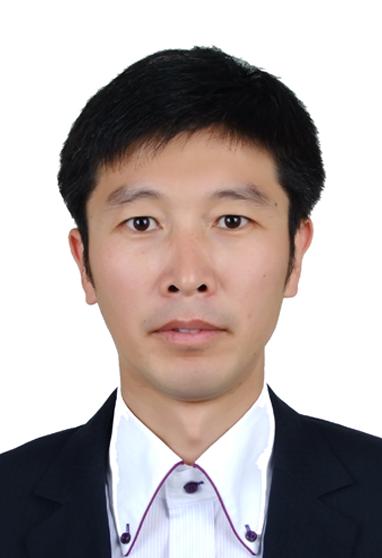
Prof. Yuhu Wu
Yuhu Wu is a Professor, Doctoral Supervisor, recipient of the National Young Talents Program, and currently the Dean of the School of Control Science and Engineering at Dalian University of Technology. He is an IEEE member, an SIAM member, and a reviewer for Mathematical Reviews. He has long been engaged in research on the analysis of nonlinear systems and stochastic logical systems, game theory decision-making, and control theory methods, as well as their applications in engine control systems and unmanned aerial vehicles.
He has published over 80 papers in important journals in the field of control theory and applications such as IEEE TAC, Automatica, SIAM J. Control Optim., Systems & Control Letters, IEEE TCST, as well as in mechanical engineering journals like IEEE TVT, Mechanical Systems & Signal Processing, and Applied Thermal Engineering. Among these, he has published 19 papers in the two top journals in the control field, IEEE Transactions on Automatic Control and Automatica (14 as first/corresponding author, 10 as regular papers), and over 30 papers in other IEEE Transactions series. He has received academic awards such as the IFAC Control Engineering Practice 2020-2022 Best Paper Award.

Prof. Chengju Liu
Chengju Liu received her Ph.D. in Engineering and is currently a Professor and Doctoral Supervisor at the College of Electronics and Information Engineering, Tongji University. She serves as a member of the College's Party Committee and its Vice Dean, and also as the Vice Dean of the Sino-Italian Engineering Innovation School, overseeing undergraduate teaching, admissions, experimental centers, and platform management. She is currently the Secretary-General of the Embodied Intelligence Technical Committee of the Chinese Association of Automation (CAA), the Vice Chairman of the Intelligent Automation Technical Committee of CAA, and a member of the Intelligent Robotics Professional Committee of the Chinese Association for Artificial Intelligence (CAAI).
Her research directions encompass embodied intelligence, robotics, and artificial intelligence. She has led 5 projects of the National Natural Science Foundation of China (including 2 key projects) and 4 basic research projects of the Shanghai Science and Technology Commission. She holds over 60 authorized invention patents, has published more than 130 academic papers, and has authored 2 monographs. She was awarded the First Prize of the Shanghai Technological Invention Award in 2020, the First Prize of the Shanghai Natural Science Award in 2017, and the Second Prize of the Shanghai Science and Technology Progress Award in 2024. She has also received multiple first prizes for provincial and ministerial level higher education teaching achievement awards.

Prof. Dong Shen
Professor Dong Shen is the Director of the Distributed Artificial Intelligence Laboratory, the Head of the Department of Information and Computing Science, and the Deputy Director of the Office of Development Planning (seconded) at Renmin University of China. In 2022, he was selected for the National High-level Young Talents Support Program. He is a Senior Member of IEEE, the Vice Chairman of the Technical Committee on Data-Driven Control, Learning and Optimization of the Chinese Association of Automation (CAA), a member of the Technical Committee on Control Theory of CAA, a member of the Intelligent Control and Systems Committee of the Chinese Institute of Command and Control, and an Editorial Board Member for international journals such as IEEE Transactions on Automatic Control.
Professor Shen has long been dedicated to the design and analysis of learning control methods. His main research interests are the control and optimization of stochastic systems, particularly in iterative learning control, multi-agent systems, distributed and decentralized control design, and optimization. He leads the Distributed Artificial Intelligence Laboratory at the Engineering Research Center of Financial Computing and Digital Engineering, Ministry of Education, with main research directions including theoretical research and engineering implementation of distributed machine learning/deep learning and artificial intelligence. He has been consecutively selected for five years in the global top 2% of scientists list for "Career-long Impact".
Keynote Speakers of ISEAE 2025
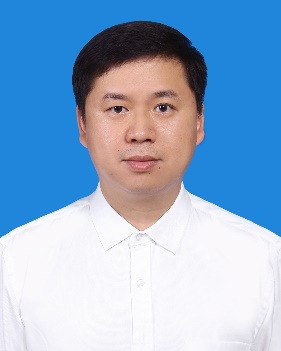 | Prof. Bin Zhou Harbin Institute of Technology, China Zhou Bin is a recipient of the National Outstanding Youth Science Fund; an awardee of the National Hundred Excellent Doctoral Dissertations; a recipient of the Chinese Youth Science and Technology Innovation Award; a recipient of the Excellent Young Scientists Fund from the National Natural Science Foundation; a winner of the Second Prize of the National Natural Science Award; a selected member of the Education Ministry's New Century Excellent Talents Support Program; and a recipient of the First Prize of the Natural Science Award from the Chinese Association of Automation (ranking first). He is a professor and doctoral supervisor at the Harbin Institute of Technology, and the director of the Control Theory and Guidance Technology Research Center. His research interests include time-varying systems, nonlinear control, multi-agent systems, spacecraft control, and aircraft guidance and control. He has published over 200 papers in top journals in the field, such as Automatica, IEEE Transactions on Automatic Control, and SIAM Journal on Control and Optimization. He currently serves on the editorial boards of international journals including Automatica, IEEE Transactions on Automatic Control, IEEE Transactions on Aerospace and Electronic Systems, and IEEE Transactions on Systems, Man, and Cybernetics: Systems. |
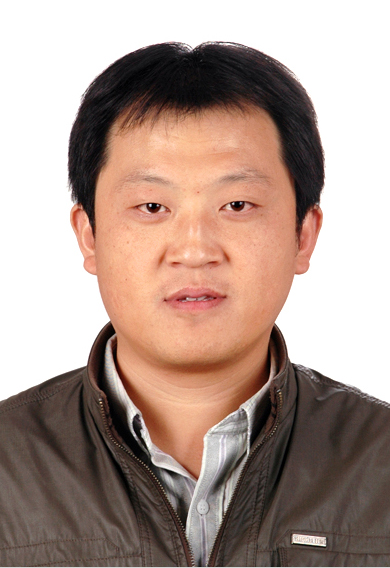 | Prof. Guangchen Wang Shandong University, China Guangchen Wang received the B.S. degree in mathematics from Shandong Normal University in 2001, and the Ph.D. degree in probability theory and mathematical statistics from the School of Mathematics and System Sciences, Shandong University in 2007. From July 2007 to August 2010, he served as a Lecturer at the School of Mathematical Sciences, Shandong Normal University. He joined the School of Control Science and Engineering, Shandong University as an Associate Professor in September 2010, where he has been a Full Professor since September 2014. His research interests include stochastic control, nonlinear filtering, and mathematical finance. He is the Recipient of Outstanding Young Project of the National Natural Science Fund. |
 | Prof. Xiaowu Mu Zhengzhou University, China Xiaowu. Mu, a distinguished professor and doctoral supervisor at Zhengzhou University, received his Bachelor's, Master's, and Doctoral degrees from Peking University in 1983, 1988, and 1991, respectively. Since 1993, he has enjoyed the State Council Special Allowance for Outstanding Contributions. From 2006 to 2017, he served as a member of the Undergraduate Teaching Guidance Committee of Education Department. Since 2021, he has served as the Executive Director and Vice Chairman of Henan Mathematical Society. He was selected for the 2024 edition of the World’s Top 2% Scientists list. His research primarily focuses on Nonlinear Systems, Stochastic Hybrid Systems, Networked Systems, and Multi-Agent Systems. He has led four projects supported by the National Natural Science Foundation of China and published over 180 high-level academic papers. |
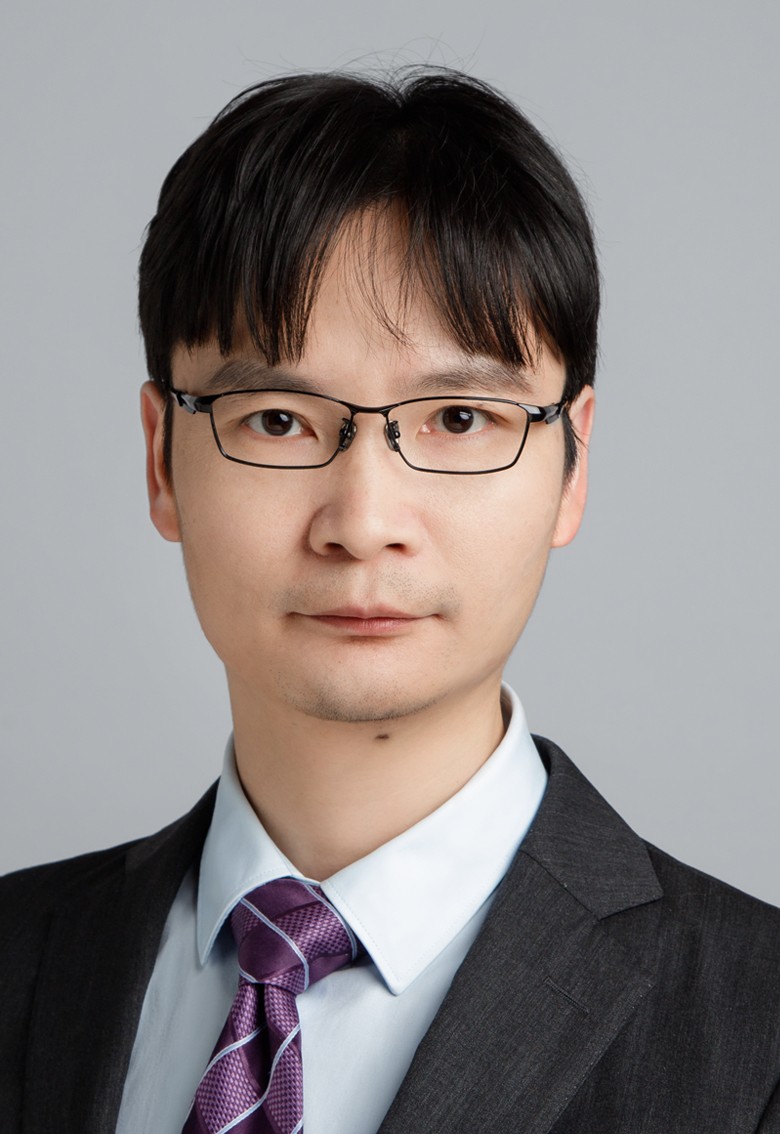 | Prof. Derui Ding University of Shanghai for Science and Technology, China Derui Ding received the Ph.D. degree in Control Theory and Control Engineering in 2014 from Donghua University, Shanghai, China. He is currently aprofessor in University of Shanghai for Science and Technology, Shanghai, China. His research interests include distributed control, filtering and optimization, learning-based control as well as data mining. He was a Highly Cited Researcher in 2019 and 2020 according to Clarivate Analytics. He was the recipient of the 2021 Nobert Wiener Review Award from IEEE/CAA Journal of Automatica Sinica, and the 2020 and 2022 Andrew P. Sage Best Transactions Paper Awards from the IEEE Systems, Man, and Cybernetics (SMC) Society. He is a Senior Member of both the Chinese Association of Automation (CAA) and the Institute of Electrical and Electronic Engineers (IEEE). He is serving as a Deputy Editors-in-Chief for International Journal of Network Dynamics and Intelligence, an Associate Editor for IEEE Transactions on Industrial Informatics, IEEE/CAA Journal of Automatica Sinica, Neurocomputing and IET Control Theory & Applications |
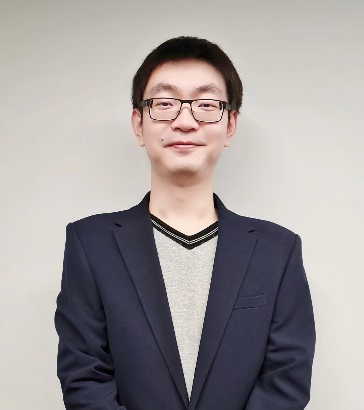 | Dr. Weibo Liu Brunel University of London, UK Weibo Liu received the B.S. degree in electrical engineering from the Department of Electrical Engineering & Electronics, University of Liverpool, Liverpool, U.K., in 2015, and the Ph.D. degree in artificial intelligence in 2020 from the Department of Computer Science, Brunel University London, Uxbridge, U.K. He is currently a Lecturer in the Department of Computer Science, Brunel University London, Uxbridge, U.K. His research interests include intelligent data analysis, evolutionary computation, transfer learning, machine learning and deep learning. He was the recipient of the 2019 Chinese Government Award for Outstanding Self-financed Students Abroad. He is a Member of the Institute of Electrical and Electronic Engineers (IEEE). He serves as an Associate Editor for the Journal of Ambient Intelligence and Humanized Computing and the Journal of Cognitive Computation. He is a very active reviewer for many international journals and conferences. |
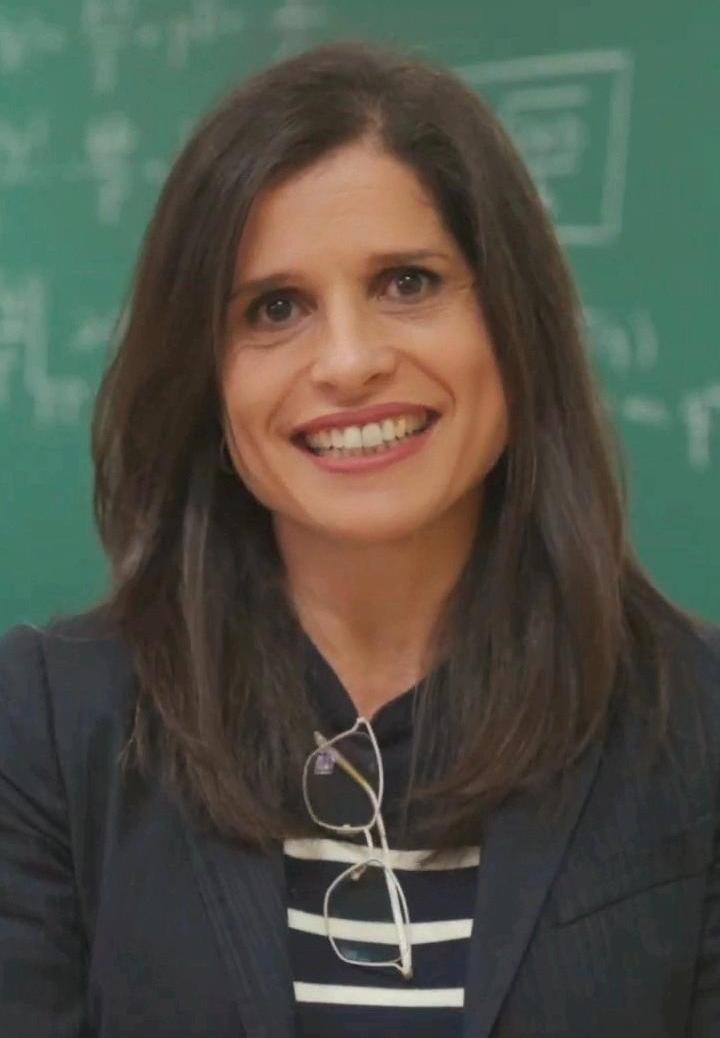 | Prof. Raquel Caballero Águila University of Jaén, Spain Raquel Caballero-Águila is a Professor in the Department of Statistics and Operations Research at the University of Jaén, Spain. She received her MSc and PhD degrees in Mathematics from the University of Granada, Spain, in 1997 and 1999, respectively. Her research interests include time-varying stochastic systems, complex networks and design of estimation al algorithms to address emerging challenges in networked systems. Prof. Caballero-Águila has authored numerousscientific papers in refereed international journals indexed in Journal Citation Reports (JCR) and has been included in recent editions of the Spanish National Research Council (CSIC) ranking of most cited Spanish female researchers. She has participated in different research projects both as a research member and as a principal investigator. She serves as a reviewer for Mathematical Reviews and is an academic editor for the journals Mathematical Problems in Engineering, Journal of Control Science and Engineering, and Systems Science and Control Engineering. In addition, she has reviewed for prestigious international journals, and has actively contributed to the organization and chairing of sessions at international conferences. Her research has been further enriched through international collaborations, including research visits to Kagoshima University (Japan) and Harbin University of Science and Technology (China) |
 | Dr. Chaoqing Jia Harbin University of Science and Technology, China Chaoqing Jia is an Associate Professor and Master Supervisor in the Department of Artificial Intelligence, Harbin University of Science and Technology, Harbin, China.Hereceived the Ph.D. degree in Operational Research and Cybernetics from the Department ofApplied Mathematics, Harbin University of Science and Technology, Harbin, China, in 2022.FromFebruary 2024 toFebruary 2025, he was an academic visitor with the Department of Computer Science, Brunel University London, Uxbridge, U.K. He has published over 20 SCI indexed papers, authored 2 monographs, and granted 8 invention patents. Moreover, he has hosted 6 projects under research including National Natural Science Foundation of China, Heilongjiang Provincial Natural Science Foundation of China, Heilongjiang Provincial Postdoctoral Science Foundation of China, etc.He isanIEEE Member andactive reviewer for many international journals and conferences. His research interests include distributed filtering and optimal state estimation for complex dynamical systems. |
Keynote Speakers of ISEAE 2024
 | Prof. Fushuan Wen, Zhejiang University, China(IEEE Fellow) 文福拴教授,浙江大学 Professor Fushuan Wen received the BE and ME degrees from Tianjin University, Tianjin, China, in 1985 and 1988, respectively, and the PhD degree from Zhejiang University, Hangzhou, China, in 1991, all in electrical engineering. He joined the faculty of Zhejiang University in 1991, and has been a full professor and the director of the Institute of Power Economics and Information since 1997, and the director of Zhejiang University-Insigma Joint Research Center for Smart Grids since 2010. He has been undertaking various teaching, research and visiting appointments in National University of Singapore (NSTB Postdoctoral Fellow, Research Fellow), Hong Kong Polytechnic University (Research Fellow, Visiting Assistant Professor), University of Hong Kong (Research Assistant Professor), South China University of Technology (University Distinguished Professor), University of New South Wales in Australia (ARC Project Senior Fellow, Senior Visiting Fellow), Queensland University of Technology in Australia (CSIRO and ARC Project Visiting Fellow), Brunei University of Technology (Professor in Power Systems), Technical University of Denmark (Otto Monsted Guest Professor in Power Systems), Nanyang Technological University in Singapore (Visiting Fellow), Murdoch University in Australia (Adjunct Professor), Tallinn University of Technology (Professor in Energy Systems), Hangzhou Dianzi University in China (Yusheng XUE Education Foundation Distinguished Professor), Commonwealth Scientific and Industrial Research Organization (CSIRO) in Australia (Honorary Visiting Scientist), Shenzhen Institute of Artificial Intelligence and Robotics for Society (Visiting Principal Research Fellow) |
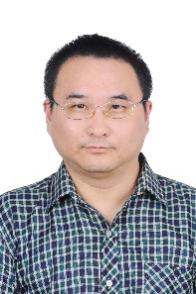 | Prof. Wei Yang, ChongQing University, China 杨为教授,重庆大学 He is a professor and doctoral supervisor in the College of Mechanical and Vehicle Engineering of Chongqing University. He is one of the "Double Innovation" talents in Jiangsu Province, a research mainstay of the "Changjiang Scholar and Innovation Team Development Program" of the Ministry of Education and the National Defense Science and Technology Innovation Team. He is an expert in the National Science and Technology Progress Award and the Science Progress Award of the Ministry of Education. He has long been engaged in the research of high performance manufacturing technology and major equipment, new energy vehicles and intelligent robots. He is responsible for or has conducted more than 50 scientific research projects entrusted by national, provincial and ministerial levels and enterprises. He has received one first-class award, three second-class awards and four third-class awards at provincial and ministerial level. He has published more than 100 papers in Mechanical Systems and Signal Processing, Proc. IMechE, Part K,Journal of Vibroengineering, IEEE TRANSACTIONS ON MAGNETIGS,etc in important academic journals and international conferences. He has nearly 30 EI/SCI citing article,and has been granted more than 20 invention patents and software copyrights. |
| Prof. Tao Lei, Shaanxi University of Science and Technology, China (IEEE Senior Member) Tao Lei is currently a Professor with the School of electric Information and Artificial Intelligence, Shaanxi University of Science and Technology. He is a senior member of IEEE, CCF, and CSIG. He was selected into the Shaanxi Province High-level Talent Program in 2017. He has served at more than ten international conferences as co-chair, co-publication chair, and co-award chair. His current research interests include image processing, pattern recognition, and machine learning. He has authored and co-authored 80+ research papers including IEEE TIP, TFS, TGRS, TCDS, TRPMS, ICASSP, ICME, ICIP, and FG, where 3 papers are selected as ESI highly cited papers. The google scholar citation is 2000+. As a project leader, he hosts the National Natural Science Foundation of China (four projects), the Outstanding Youth Fund of Shaanxi Province, and the Key Research and Development Program of Shaanxi. |
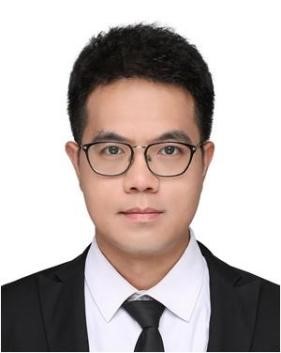 | Prof. Yiming Zhang,Fuzhou University, China |
Keynote Speakers of ISEAE 2023
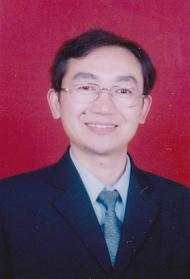 | Prof. Yigang He, Wuhan University, China 何怡刚教授,武汉大学 Title: Power Electronic Conversion Technology for New Energy Vehicles Abstract: Most of today’s battery-electric vehicles use battery configurations, resulting in the 150~450V DC-link voltage range, and this high voltage configuration is often called the 400V system. In contrast, in electrified truck and construction vehicles, the maximum DC-link voltage can reach 870 V, and this configuration is often called the 800V system. Currently, there are several high-end electric passenger vehicles under development utilizing the 800V system. This presentation discusses the benefits and challenges of using the 800V system in passenger vehicles. The key power electronic converters, including 800V soft switching DC-DC converter, 800V motor drive, integrated design of onboard charger and auxiliary power module, and hybrid switched-capacitor converter based power supplies, are analyzed and discussed. Experience: Yigang He received the M.Sc. degree in electrical engineering from Hunan University, Changsha,China, in 1992 and the Ph.D. degree in electrical engineering from Xi’an Jiaotong University, Xi’an,China, in 1996.In 1990, he joined the College of Electrical and Information Engineering, Hunan University and was promoted to Associate Professor, Professor in 1996, 1999, respectively. From 2006 to 2011, he worked as the Director of the Institute of Testing Technology for Circuits and Systems, Hunan University. He was a Senior Visiting Scholar with the University of Hertfordshire, Hatfield, U.K., in 2002. From 2011 to 2017, he worked as the Head of School of Electrical Engineering and Automation, Hefei University of Technology. In October 1,2017, he joined the Wuhan University, China, and currently works as the vice-Head of School of Electrical Engineering and Automation , Wuhan University. Meanwhile he was vice president of China’s Energy Institute of Science and Technology, vice president of Anhui scientists Entrepreneurs Association, director of the state local joint engineering laboratory for renewable energy grid technology. His teaching and research interests are in the areas of power electronic circuit theory and its applications, testing and fault diagnosis of analog and mixed-signal circuits, electrical signal detection, smart grid ,satellite communication monitoring, and intelligent signal processing. On the above research areas he has presided over a number of state-level projects research such as the National Natural Science Foundation of China, the State Key Program of National Natural Science Foundation of China,the national key research and development plan "important scientific instruments and equipment development", the National High Technology Research and Development Program of China, the Major State Basic Research Development Program of China ,etc. He has published some 300 journal and conference papers which was included more than 1000 times in Science Citation Index of American Institute for Scientific Information in the aforementioned areas and several chapters in edited books.Dr. He has been the general chair, session chair and the committee member of a lot of international academic conferences respectively. He was the recipient of a number of national and international awards, prizes, and honors. For example, he was the winner of national outstanding youth science fund, China national excellent science and technology worker. |
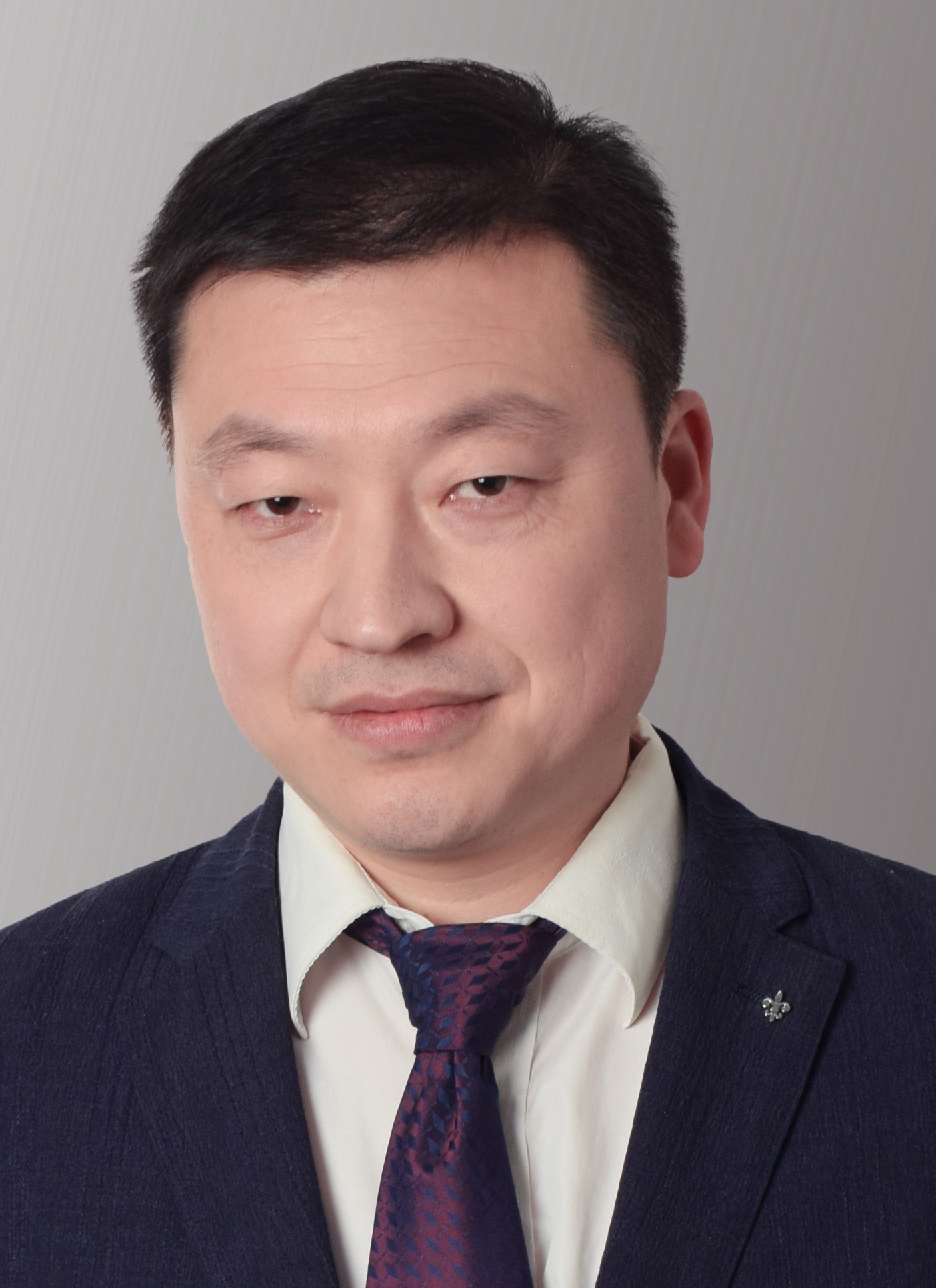 | Prof. Kai Yang, Huazhong University of Science and Technology, China 杨凯教授,华中科技大学 Title: Advanced model predictive control of multiphase electric machines Abstract: The multiphase machines have been widely explored in industries and academia in the past years, since they can achieve the advantages of lower power rating per phase, lower torque pulsation and better fault tolerant capability. Thus, the multiphase machines are more preferred than the three-phase counterparts in high power and safety-critical applications, such as electric ship propulsion, elevator, wind power generation and so on. In addition, the model predictive control (MPC) has emerged as a competitive technique for the control of machine drives and power electronics in recent years. There are still many challenges imposed on the MPC when it is applied in conjunction with the multiphase machines. First, in the conventional MPC, the number of prediction vectors increases exponentially as the number of phase increases. Secondly, high amount of harmonic currents is introduced due to the small leakage impedance of the winding structure of asymmetrical six-phase machines. Thirdly, the parameter mismatch will result in prediction error, thus degrading the control performance. Advanced model predictive control strategies are desired to exploit the potential of multiphase machines. Experience: Visiting scholar at the University of Leuven in Belgium and visiting professor at the University of Changwon in Korea. In recent years, he has presided over four National Natural Science Fund projects, two major national science and technology projects, one national support plan, one 863 Project, one provincial fund, one international cooperation project, and more than 40 other school-enterprise cooperation projects. He has published more than 200 papers of the first author in the important academic journals at home and abroad, among which 170 papers are included in Sci/ei. There are 42 patents for invention and 28 patents for utility model. |
 | Prof. Qiang Yang, Zhejiang University, China 杨强教授,浙江大学 Title: Renewable Energy Dominated Power Systems - Technological Challenges, Research Cases, and Future Prospects Abstract: This speech will outline the recent advances of Renewable Energy Dominated Power Systems from a number of aspects, including the technological challenges and future development trends. Several research cases and results will be reported with analysis and discussions. This talk hopes to bring some new insights into the recent studies in the area from the recent research activities carried out by the research group. Specifically, multi-energy planning and control, the intelligent maintenance of large-scale system infrastructures as well as system cybersecurity issues are discussed. Experience: Qiang Yang (M’03-SM’18) received Ph.D. degree in Electronic Engineering and Computer Science from Queen Mary, University of London, London, U.K., in 2007 and worked in the Department of Electrical and Electronic Engineering at Imperial College London, U.K., from 2007 to 2010. He visited the University of British Columbia and the University of Victoria Canada as a visiting scholar in 2015 and 2016. He is currently a full Professor at the College of Electrical Engineering, Zhejiang University, China, and has published more than 240 technical papers, filed 48 national patents, co-authored 2 books, and edited 2 books and several book chapters. His research interests over the years include smart energy systems, large-scale complex network modeling, control and optimization, learning based optimization and control. He is a Fellow of the British Computer Society (BCS), a Senior Member of IEEE, IET and the Senior Member of China Computer Federation (CCF). |
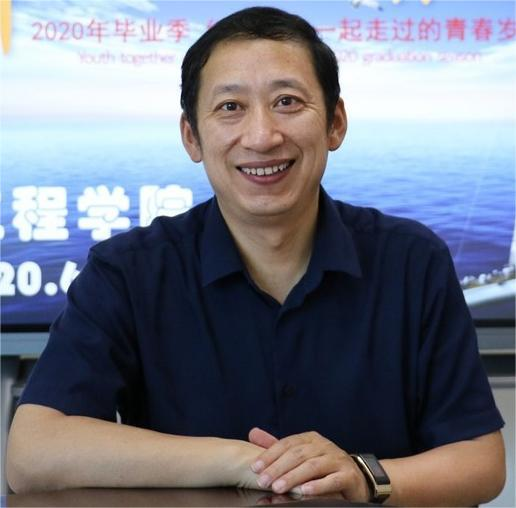 | Prof. Gang Qiao, Harbin Engineering University, China 乔钢教授 哈尔滨工程大学 Title: Application and challenges of marine information technology Abstract: This paper introduces the demand and application of marine information technology in military and civil fields. The current situation and development trend of marine information technology, including underwater detection, communication, navigation, positioning and other information technologies, are emphatically analyzed, and the technical challenges, solutions, technical capabilities and typical applications of underwater information systems are introduced. Experience: Qiao Gang has been a full Professor with Harbin Engineering University (HEU), and served as the dean of College of Underwater Acoustic (UWA) Engineering, HEU. He is also the director of National Key Laboratory of UWA Science and Technology, and the director-general of Acoustical Society of Heilongjiang Province. His research interests lie in the areas of UWA communication and networking, bionic UWA communication and detection, UWA localization and navigation technologies. He and his group proposed the full-duplex UWA communication system and bionic covert UWA communications, and developed a series of UWA modems. He published over 150 papers, got over 50 China National Invention Patents and achieved over 10 Provincial and Ministerial-Level Science and Technology Awards. |
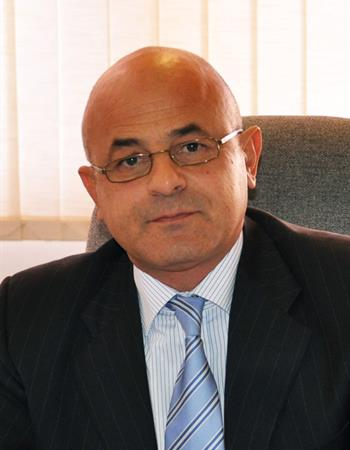 | Prof. Rza Bashirov, Eastern Mediterranean University Title:Interplay between paradigms - how to select an appropriate approach for modeling biological systems Abstract:Quantitative modeling of biological systems with Petri nets has undergone a renaissance over the past two decades. In spite of ever-growing numbers of models, it is still a question whether such models are biologically relevant. Despite the fact that most of the biological processes are mesoscopic in scale, the majority of models is based on deterministic predictions, which cannot quantify uncertainties and randomness inherent in such biological processes. Choice between deterministic, stochastic and fuzzy parameters and aspects; that is, what modeling approach to use to approximate biological systems to the desired relevance, and how to measure the parallels and discrepancies between modeling paradigms, are the main questions addressed in this work. We use Petri nets with continuous, hybrid, stochastic and fuzzy extensions to exemplify case studies. Statistical analysis reveals significant deviations between simulation results collected from three modeling approaches. Since underlying biological systems are at the mesoscopic-scale, we conclude that fuzzy stochastic approach produces quantitative results with the most biological relevance. Keywords:Quantitative modeling; Discrete, continuous and hybrid Petri nets Determinism; Stochasticity; Randomness; Uncertainty; Fuzzy sets; Statistical analysis. |